Flora in Sariska National Park — Dhok and Khair trees across Aravalli hills
Sariska National Park · Rajasthan

Flora in Sariska National Park

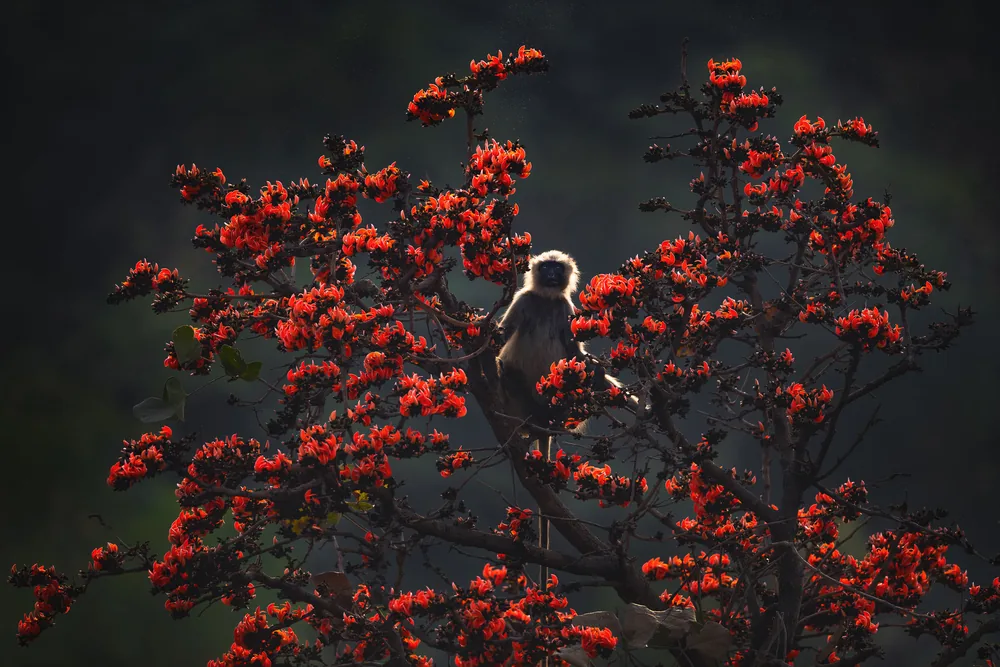
Where Dhok trees silver the ancient Aravalli hillsides, Khair groves scent the valleys with their pale bark, and every February the Flame of the Forest sets the forest canopy alight — long before any leaf appears.

400+Plant Species Recorded Across the Reserve
VariedTerrain — Aravalli Hills, Valleys, Gorges & Plains
5+Perennial Water Sources Sustaining Aquatic Flora
Overview

The Aravalli's Ancient Green — Resilient, Layered, and Alive

Flora in Sariska National Park grows from one of Earth's oldest geological formations — the Aravalli mountain system, a range so ancient it predates the Himalayas by billions of years. Across 881 sq. km of Alwar district in Rajasthan, the park carries a distinctly northern tropical dry deciduous character, where Dhok woodland dominates the ridges, Khair groves occupy the valley floors, and Flame of the Forest ignites the hillside in a brief, spectacular spring bloom. Over 400 plant species have adapted to this landscape of thin soils, hard rock, and a climate that swings from 48°C summer heat to near-freezing winter nights. Seasonal streams and waterholes sustain pockets of richer, moisture-dependent vegetation — ferns, climbers, and riparian trees — that contrast sharply with the surrounding thorn scrub. Grasslands in the valley floors sustain large herbivore herds that in turn support Sariska's recovering tiger population, translocated here after a dramatic local extinction in the early 2000s. Every plant in this forest carries the weight of that recovery story — providing food, cover, and ecological structure for a park rebuilding itself from the ground up.

Ecosystem Highlights

  • Dhok-dominated dry deciduous forest on thin Aravalli ridge soils
  • Khair-Dhok mixed woodland — the park's signature vegetation type
  • Flame of the Forest — February–March spring spectacle
  • Seasonal grasslands sustaining sambar, nilgai, and cheetal
  • Thorny Babul scrub providing structural cover for ground prey
  • Riparian vegetation along Ruparel river and seasonal nullahs
  • Medicinal and culturally significant plants used by local communities
  • Ancient Aravalli geology creating unique micro-habitat diversity
Other Notable Species

12 Plants That Complete the Sariska Ecosystem

Beyond its defining trio, flora in Sariska National Park supports a resilient community of native trees, thorny shrubs, grasses, and climbers — each species filling a precise ecological role in this ancient, demanding Aravalli landscape.

# Common Name Latin Name Category Key Use
01

Babul Acacia

Vachellia niloticaAcaciaThorny cover, nesting habitat
02

Ber (Indian Jujube)

Ziziphus mauritianaFruit TreeWildlife fruit, dry season food
03

Khejri (State Tree)

Prosopis cinerariaNativeNitrogen fixation, pod fodder
04

Salai (Indian Frankincense)

Boswellia serrataMedicinalResin — Shallaki, anti-inflammatory
05

Tendu (Ebony)

Diospyros melanoxylonUtilityBeedi leaf, dry season fruit
06

Amla (Indian Gooseberry)

Phyllanthus emblicaMedicinalAyurvedic tonic, wildlife food
07

Gular (Wild Fig)

Ficus racemosaFruit TreeYear-round wildlife fruit source
08

Dhaman Grass

Cenchrus ciliarisGrasslandCore herbivore grazing habitat
09

Kair (Capparis)

Capparis deciduaScrubArid scrub berry, dry slope cover
10

Harsingar (Night Jasmine)

Nyctanthes arbor-tristisNativeSeasonal flower, medicinal use
11

Bel (Wood Apple)

Aegle marmelosMedicinalSacred fruit, digestive medicine
12

Climbing Fig (Kagzi Ber)

Ficus pumilaClimberRock face cover, erosion control
Water plants in Sariska National Park
Aquatic Flora

Water Plants of Sariska

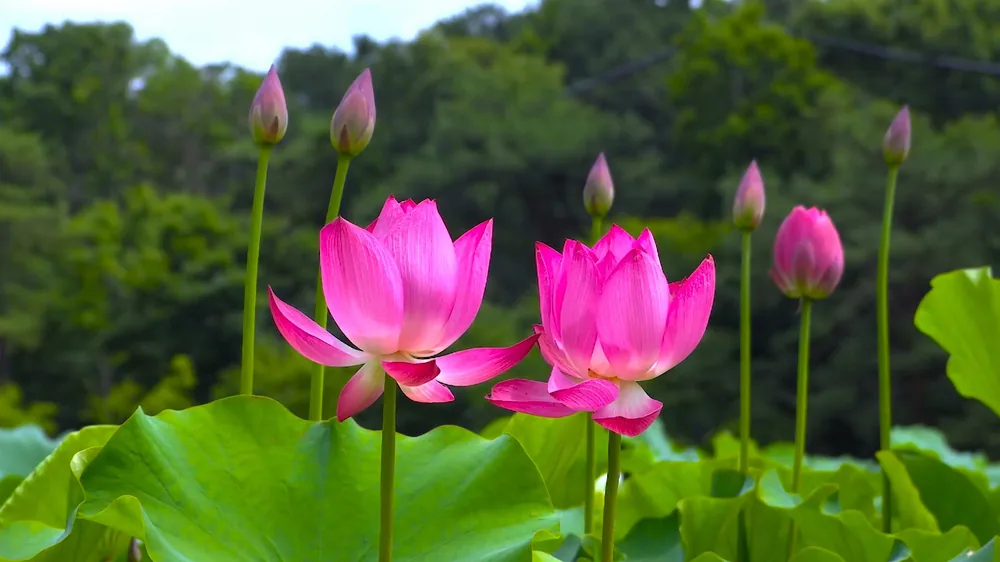
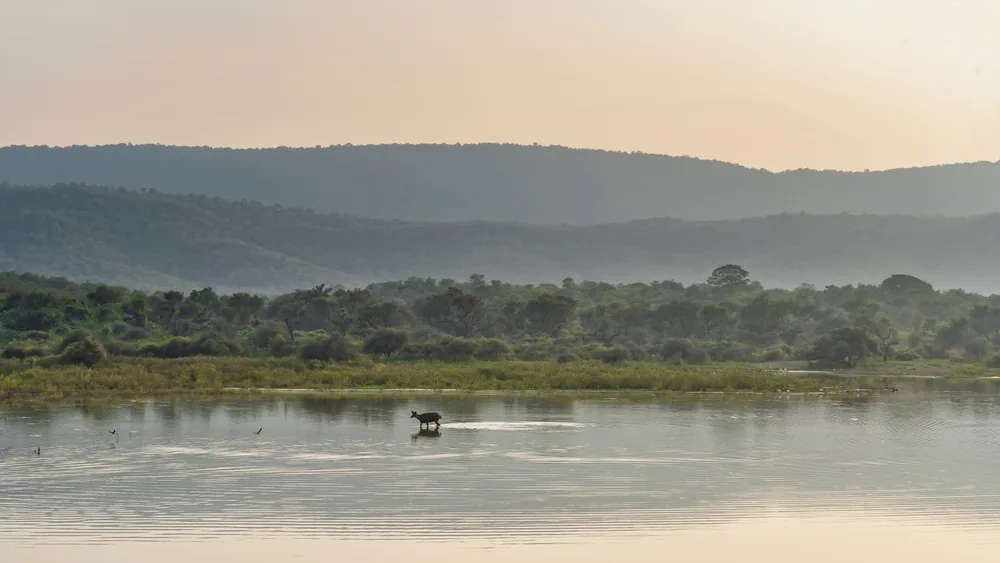
Sariska's water sources — including the perennial Ruparel river, the Siliserh Lake on its periphery, and several seasonal dams and water holes — sustain pockets of aquatic and moisture-loving vegetation that stand in vivid botanical contrast to the dry hillside scrub surrounding them. These waterside plant communities are ecological magnets, concentrating herbivores, wading birds, and reptiles in the dry months — and through them, drawing in the park's tigers and leopards to drink and hunt at the water's edge. Even in Sariska's semi-arid climate, aquatic flora delivers outsized ecological value.

Indian Lotus

Nelumbo nucifera

Blooms in seasonal reservoirs and dams

Water Smartweed

Persicaria amphibia

Nullah-fringing aquatic herb; waterfowl habitat

Explore More

Explore More About Sariska

FAQ

Frequently Asked Questions About Flora in Sariska

What type of forest vegetation is found in Sariska National Park?

Sariska National Park is covered by northern tropical dry deciduous forest, dominated by the Khair-Dhok mixed woodland community — a vegetation type considered characteristic of the northern Aravalli landscape. The park's ridges carry open Dhok forest, valley floors support the mixed Khair-Dhok woodland, and broader basins hold seasonal grasslands. Over 400 plant species have been recorded across the reserve's 881 sq. km.

What is the Khair-Dhok woodland and why is it important?

Khair-Dhok mixed woodland is Sariska's signature vegetation type — a community where Khair (Senegalia catechu) and Dhok (Anogeissus pendula) co-dominate the valley floors and lower slopes. This community is denser, more multi-layered, and botanically richer than the ridge Dhok forest alone. Ecologically it is critical: the combination of Khair's thorny understorey and Dhok's canopy creates the habitat complexity that supports high prey density and consequently attracts tigers, leopards, and other large predators.

What is Khair used for and what makes it ecologically significant?

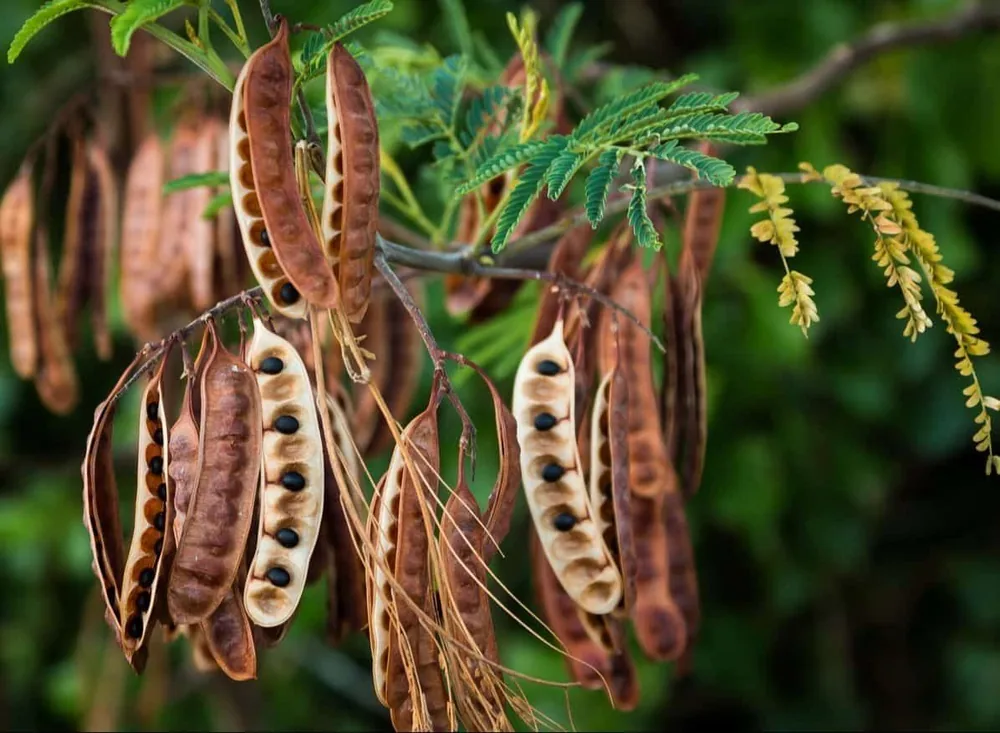
Khair (Senegalia catechu) produces Catechu — a dark brown resin extracted from its heartwood — used historically in betel-nut preparations, fabric dyeing, leather tanning, and Ayurvedic medicine. Ecologically it is a nitrogen-fixing legume that enriches Aravalli soils for surrounding plant species. Its thorny branches provide nesting and denning cover for birds and small predators, and its seed pods sustain sambar and nilgai through the dry season.

When does the Flame of the Forest bloom in Sariska?

Flame of the Forest (Butea monosperma / Palash) blooms in Sariska from late January through mid-March, producing vivid orange-red flowers on completely bare branches. In Sariska's open valley terrain, individual Palash trees are often silhouetted against the grey Aravalli ridges in spectacular isolation — giving the bloom a more sculptural, exposed quality than in denser forests. Late February is the peak bloom period and one of the most rewarding times to visit for botanical and wildlife photography combined.

How does the flora of Sariska support its recovering tiger population?

Flora is the biological foundation of Sariska's tiger recovery. The Khair-Dhok mixed woodland provides the structural concealment that makes hunting possible for tigers. Seasonal grasslands sustain the sambar, nilgai, and cheetal herds that are the primary prey base. Fruiting Ber and Gular trees concentrate prey in predictable locations. Riparian vegetation near water sources creates ambush corridors. Without the ecological recovery of native vegetation, the tiger relocation programme begun in 2008 could not succeed.

How does Sariska's flora change across seasons?

The monsoon (July–September) transforms Sariska rapidly — brown hillsides flush green, nullahs flow, and climbers and ferns appear in shaded outcrops. October–November is the lushest period and excellent for safaris. December–February is clear, cooler, and dry — the Flame of the Forest begins to bud. February–March is the spring bloom peak. April–June brings extreme heat, bare deciduous canopy, and wildlife concentrated at water — making this the most reliable period for tiger sightings despite the harsh conditions.

Are there medicinal plants in Sariska National Park?

Yes. Sariska holds several plants of documented medicinal importance. Salai (Boswellia serrata) produces Shallaki resin, globally used as an anti-inflammatory. Amla (Phyllanthus emblica) is a cornerstone of Ayurveda. Bel or Wood Apple (Aegle marmelos) has digestive and therapeutic properties. Harsingar (Nyctanthes arbor-tristis) is used in traditional medicine for fever and skin conditions. Khair's Catechu resin is documented in Ayurvedic practice for oral and throat conditions.

What is the best time to visit Sariska National Park?

For flora, late February to March is the most spectacular period — Flame of the Forest in peak bloom, comfortable temperatures, and the forest transitioning from winter to spring. For tiger sightings, April to June offers the best odds as the canopy thins and wildlife concentrates near water. October to February balances green vegetation, comfortable safari conditions, and good general wildlife activity. The park typically closes for the monsoon from July to September — confirm exact dates with the Rajasthan Forest Department before planning.

What conservation challenges affect flora in Sariska?

The main threats to flora in Sariska National Park are livestock grazing from surrounding villages, illegal extraction of non-timber forest products (particularly Tendu leaves and Salai resin), and Lantana camara invasion in disturbed buffer zone areas. Village relocation programmes, solar fencing, and Lantana removal drives are ongoing. The recovery of native vegetation — measured by Dhok regeneration on previously bare hillsides — is one of the most positive ecological indicators in the reserve's recent conservation history.

Which animal is found in Sariska Tiger Reserve?

Flora & Fauna in Sariska are very vast. Sariska Tiger Reserve has tigers, leopards, wild pigs, chital, porcupines, peafowl, partridges, and thrushes among the wildlife along with various other animals.

Which animal is famous for Sariska and Ranthambore?

The Sariska and Ranthambore are famous for their Royal Bengal Tigers and are incredibly rich in both flora and fauna.

Are tigers seen in Sariska?

One of the best national parks in India for watching tigers is Sariska National Park. There are 27 tigers residing in the forest according to the survey of 2023.

How many tigers are there in Sariska?

According to the survey of March’23, a total of 27 tigers are there in Sariska including 13 females, 8 males, and 6 cubs.

Are there leopards in Sariska?

There are between 25 and 30 leopards living in Sariska. Due to the region’s rugged geography and large trees i.e. rich flora & fauna in Sariska, leopards flourish.

Sariska National Park is famous for which animal?

Sariska National Park is famous for Royal Bengal Tigers.

In Depth

Detailed Overview: Flora in Sariska National Park

Flora in Sariska National Park is rooted in one of the subcontinent's most ancient and ecologically tested landscapes. The Aravalli range — the geological spine of the park — is among the oldest mountain systems on Earth, its exposed quartzite and schist ridges supporting a vegetation community that has adapted over millions of years to extreme aridity, thin soils, and punishing thermal cycles. The result is a northern tropical dry deciduous forest that may appear sparse compared to the jungles of central India, but is in fact extraordinarily resilient — a landscape where every tree, shrub, and grass has earned its place through evolutionary precision.

The park's vegetation zones are shaped primarily by topography and moisture availability. Upper ridges and exposed slopes carry open Dhok forest — the characteristic pale-barked canopy that silvered the Aravalli before human settlement reduced its range across Rajasthan. Valley floors and seasonal stream channels support the Khair-Dhok mixed woodland, a vegetation community uniquely associated with Sariska and the surrounding Alwar landscape. This mixed forest is denser, more multi-layered, and significantly richer in understorey diversity than the ridge Dhok stands — supporting a higher density of prey species and consequently attracting more predator activity. Seasonal grasslands occupy the broader valley basins, with Dhaman and other native grasses providing the grazing base that sustains Sariska's growing herds of sambar, nilgai, and cheetal.

The seasonal rhythm of flora in Sariska National Park follows the monsoon with characteristic dry-forest drama. The rains (July–September) transform the park within days — brown hillsides flush green, seasonal nullahs run with water, and climbers race up tree trunks toward the canopy. Ferns and mosses colonise shaded rocky outcrops. By October, the park is at its greenest and most productive, with fresh grass and abundant fruit drawing wildlife into open areas in large numbers. As winter deepens (November–February), deciduous trees begin to shed, the Flame of the Forest starts to bud, and the landscape takes on the warm ochre tones that make Sariska's dry-season photography so compelling. Spring (February–March) brings the Palash bloom — the park's most dramatic single botanical event. By May and June, most of the forest is bare and the temperature climbs, concentrating wildlife at the few remaining water points in patterns that tigers have learned to exploit.

The relationship between plants and animals in Sariska is especially vivid in the context of the park's tiger recovery. After the near-total local extinction of tigers by 2005 — caused by poaching, prey depletion, and human pressure — a structured relocation programme began in 2008. For a tiger population to survive, the forest must provide not only prey but the structural concealment that makes hunting possible. Khair-Dhok mixed woodland, with its multi-layered canopy and thorny understorey, provides exactly the combination of open hunting ground and dense cover that tigers require. The health of Sariska's flora is therefore not an aesthetic or academic concern — it is the biological prerequisite of the tiger recovery project that has become one of India's most closely watched conservation efforts.

Conservation challenges for flora in Sariska National Park include persistent pressure from grazing by livestock from surrounding villages, illegal collection of non-timber forest products — particularly Tendu leaves and Salai resin — and the encroachment of invasive Lantana camara in disturbed areas near the park boundary. The Sariska Tiger Reserve administration has implemented village relocation programmes, solar fencing, and Lantana removal drives as part of a long-term ecological restoration strategy. Recovery of native plant communities, particularly in previously degraded buffer zone areas, is a measurable indicator of the reserve's improving ecological health.

Detailed Species Profiles: Top 3 Trees of Sariska

Three trees at the heart of an ancient, recovering forest — each telling a different part of Sariska's ecological and conservation story.

Dhok Anogeissus pendula

Ridge Dominant

In Sariska, Dhok is more than a tree — it is a conservation indicator. The health, density, and regeneration of Dhok forest across the reserve's Aravalli ridges directly reflects the ecological trajectory of the park itself. Anogeissus pendula reached its lowest population levels in Sariska during the years of maximum human pressure — overgrazing by livestock, fuelwood collection, and charcoal production from the reserve's buffer zones stripped vegetation from hillsides and prevented Dhok regeneration. Since intensified protection began following the 2008 tiger relocation, Dhok regeneration has been one of the most measurable positive ecological signals in the park. Young Dhok saplings — identifiable by their smooth, pale bark and delicate pendulous tips — now carpet hillsides that were bare rock a decade ago. For visitors, the degree to which young Dhok has colonised the slopes is a direct visual measure of how far Sariska's ecological recovery has come. Mature Dhok in Sariska grows to 15–18 metres on the best valley soils, its canopy providing the thermal cover and structural habitat that tigers, leopards, and the entire prey community depend on through the long, scorching summer. Its leaf litter builds the thin organic soil layer that allows all other forest floor species to establish — making every Dhok a nursery for the next generation of the forest beneath it.

Forest Cover~90% of park
AdaptationDrought-tolerant

Khair Senegalia catechu

Valley Floor Anchor

Khair — Senegalia catechu — is Sariska's most botanically distinctive tree and the one that most clearly separates Sariska's flora from that of Ranthambore or central India. The Khair-Dhok mixed woodland type, where these two species co-dominate in the valley floors and gentle lower slopes, is considered a vegetation community characteristic of the northern Aravalli and is named in regional ecological classifications as a signature forest type of the Alwar landscape. Khair itself is a medium-sized, thorny deciduous tree with pale, yellowish-brown bark that flakes in papery strips — giving it a distinctive texture against the smoother Dhok trunks alongside it. Its feathery, twice-compound leaves give the Khair canopy a delicate, airy quality that lets dappled light reach the understorey below, creating a richer ground flora of herbs and shade-tolerant shrubs than is found under the denser Dhok ridges above. Ecologically, Khair's most important function is as a legume: its root nodules fix atmospheric nitrogen into the soil, enriching even the poor Aravalli valley soils and creating conditions in which other species can establish more readily. Its dark brown heartwood resin — Catechu, or Katha — has been commercially extracted for centuries: used in betel preparations, as a fabric dye, in Ayurvedic formulations for mouth and throat conditions, and historically in the leather tanning industry. Within Sariska's protected boundary, Khair grows undisturbed, its multi-branched thorny canopy providing denning and resting cover for jungle cats and leopards, and its seed pods sustaining sambar and nilgai through the harshest dry-season months.

Forest TypeMixed Woodland
Key FunctionNitrogen fixation

Flame of the Forest Butea monosperma

Spring Fire

In Sariska, the Flame of the Forest performs its annual spectacle against one of its most dramatic possible backdrops — the ancient quartzite ridges of the Aravalli, their grey-silver faces stacked behind one another into the distance, suddenly broken by scattered trees holding clusters of vivid orange-red flowers against a blue winter sky. Butea monosperma in Sariska grows in the more open, sunlit valley terrain and rocky grassland margins — rarely in the shade of dense Dhok forest — which means each flowering tree stands at full visual exposure, its bloom visible from a considerable distance across the open landscape. This differs from Ranthambore, where Palash is scattered more uniformly through the forest, and gives Sariska's Flame of the Forest a more isolated, sculptural quality that makes late February to mid-March one of the most rewarding periods for wildlife photographers combining botanical and animal subjects in the same frame. Ecologically, Palash in Sariska plays a critical pollination role in the late dry season: its flowers open weeks before most other species produce nectar or pollen, making it the primary food source for sunbirds, purple sunbirds, and carpenter bees that have overwintered in the park. These pollinator species in turn service other flowering plants as the season progresses. The large, papery seed pods of Palash are also a food resource — eaten by deer and dispersed by wind across the open valley floors. Its large compound leaves, emerging after the flowers fade, provide generous summer shade in a landscape where shade is a survival resource for ground fauna including monitor lizards, star tortoises, and jungle fowl.

Bloom WindowLate Jan – March
Local NamePalash / Tesu

Other Tree Species in Sariska National Park

The supporting botanical community of Sariska reflects the park's position at the ecological crossroads of two distinct regional floras — the Aravalli dry thorn forest of Rajasthan and the transitional dry deciduous woodland that stretches toward the Gangetic plain. Babul Acacia (Vachellia nilotica) is the most widespread supporting species, colonising degraded patches, nullah banks, and open grassland margins with flat-topped canopies and strongly thorned branches that provide structural nesting habitat for dozens of bird species, including the Baya weaver and the white-throated munia. Its yellow puffball flowers bloom twice a year and are a reliable nectar source for bees, butterflies, and sunbirds.

Ber (Ziziphus mauritiana) is Sariska's most important winter fruiting tree — its small, round, reddish fruit ripening between November and February and drawing extraordinary wildlife aggregations into the more open areas of the park. Grey-crested babblers, rose-ringed parakeets, grey hornbills, nilgai, sambar, and wild boar all feed on ripe Ber fruit, creating the prey concentrations that make December and January among the most productive months for tiger sightings at Sariska. Salai or Indian Frankincense (Boswellia serrata) grows on the drier, sunnier hillsides above the Khair-Dhok zone, its white, papery, peeling bark and the characteristic resinous scent that intensifies in hot weather making it unmistakable. Sariska's Salai population is under historical pressure from resin tapping — the commercial extraction of Shallaki, an anti-inflammatory resin traded globally under the name Indian Boswellia — but protection within the reserve boundary has allowed these trees to grow to considerable girth.

Tendu (Diospyros melanoxylon) provides both ecological and livelihood value in Sariska's buffer zone, its large leathery leaves collected seasonally by local communities for beedi rolling — a practice permitted under regulated frameworks in the buffer zones. Inside the core area, Tendu fruit sustains fruit bats, civets, and jungle cats in the summer. Harsingar or Night Jasmine (Nyctanthes arbor-tristis) appears in the moister, more sheltered valley pockets, its fragrant white flowers with orange-red stalks opening only at night and carpeting the forest floor at dawn — one of Sariska's least-photographed but most beautiful botanical details. Bel or Wood Apple (Aegle marmelos) grows near the park's ancient ruins and temples — particularly around the historic Kankwari Fort deep within the reserve — suggesting long association with human settlement and worship. Its large, woody fruits are eaten by sloth bears and smaller mammals. Dhaman grass and other native grassland species form the crucial open foraging zones that sustain Sariska's herbivore herds and through them, the tigers and leopards whose numbers in this ancient, recovering forest are slowly, steadily rising again.
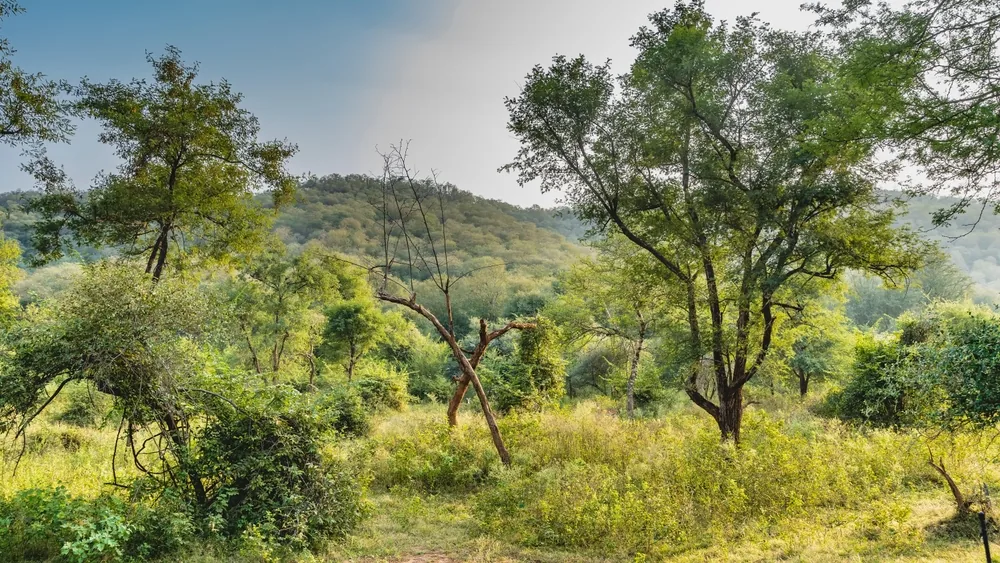
Overview Guide

Flora in Sariska

Flora in Sariska is the mainstream attraction of tourists. Sariska National Park has unique flora which attract travelers who are interested in wildlife and botany from each part of the world.

Flora in Sariska Forest Area

Sariska National Park has some wonderful flora. Also, it is situated in the western Aravali Hills. The Sariska National Park is a delightful experience of finding greenery in the vast desert areas that make up the state of Rajasthan.

The forest of Sariska is heaven on earth for nature lovers because of the rich vegetation in the arid area and the lush greenery. The Sariska Reserve forest covers up to 300 different species of plants.

The ‘Dhok,’ also known by its scientific name Anogeissus pendula, is the most common plant species in Sariska National Park. Dhok trees occupy around 90% of the surface area. The dhok tree’s leaves and fruits are a key source of food for animals including Sambhar Deer, Spotted Deer, and Nilgai. In comparison to other trees in the park, the Dhok tree can also grow in shallow soil, although it has a slower growth rate and a smaller height than trees like the Neem and Palm.

The palm tree (Arecaceae), pipal tree (Ficus religiosa), banyan tree (Ficus bengalensis), and neem tree (Azadirachta Indica) are the other main trees in this park. These trees also provide medicinal and spiritual benefits. Mango (Magnifera indica), Tamarind (Tamarindicus indica), also known as Imli, Jamun (Syzygium cumini), sometimes known as the Indian blackberry fruit, and Ber (Zizyphus mauritania), are the fruit trees that are most frequently seen in the Sariska. The “Sacred Tree” (Butea monosperma), which adds to the attractiveness of the surrounding area and creates an amazing sight, is also known as “The flame of the forest” due to the bright orange-red color of its flame-shaped blossoms.

In addition to all of these notable trees, the park is home to a variety of other plants, including the Babul (Acasia nilotica), Gum (Sterculia urens), Gurjan (Lannea coromandelica), Kadam (Anthocephalus cadamba), Khair (Acacia catechu), Khajur (Phoenix sylvestris), Kakera (Flacourtia indica), Karel. The main aquatic blooms of Sariska National Park’s lakes and water features are lotuses and water lilies, and Khus grass covers the shores of the lakes.

The Siliserh Lake, river streams, and waterfalls make the flora of the park more magnificent and attractive for tourists.