Best for
Tiger & Big Cat Sightings
April – June
Thin deciduous canopy and dried natural pools concentrate tigers and leopards around perennial waterholes.
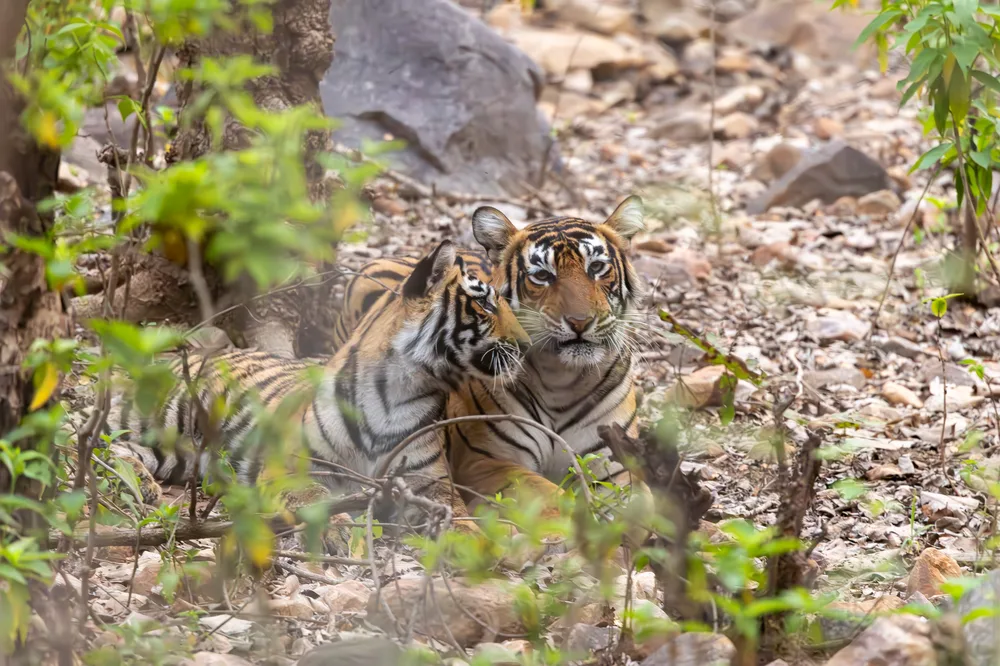
A season-by-season guide to Aravalli tiger tracking, weather conditions, waterhole sightings, birdwatching, and safari planning across Rajasthan's premier tiger reserve.
A quick decision guide — wildlife trackers, photographers, families, and nature seekers each have their ideal Sariska season. Here's how to decide.
Sariska Tiger Reserve in Alwar, Rajasthan, is a captivating wildlife destination folded into the ancient Aravalli Hills. Spread over 881 sq. km of dry deciduous forests, rocky plateaus, and scrub-thorn terrain, the best time to visit Sariska National Park is from October to March, when cool, comfortable temperatures make morning and evening safaris a pleasure. For dedicated tiger trackers and wildlife photographers, the dry summer months of April to June offer the highest sighting probabilities as animals congregate around receding waterholes.
Best for
Thin deciduous canopy and dried natural pools concentrate tigers and leopards around perennial waterholes.
Best for
Golden morning light, mist over Aravalli ridges, Flame of the Forest blooms, and comfortable safari temperatures.
Best for
Pleasant weather (10°C–25°C), ideal for exploring Kankwari Fort, Pandupol Temple, and scenic open-jeep safaris.
Best for
Over 220 resident species joined by migratory waterfowl at Siliserh Lake and raptors soaring over cliff faces.
Sariska's Aravalli landscape shifts character dramatically across seasons — each offering a distinct wildlife and travel experience.
Peak Season
October – March
Crisp Aravalli mornings, golden light, post-monsoon greenery, and comfortable all-day weather. Prime season for general wildlife, migratory birdwatching, and heritage visits within the park.
Sighting Season
April – June
Scorching heat, bare deciduous woodland, and high predator visibility. Water sources dry up, drawing tigers, leopards, and prey to Kalighati, Siliberi, and park waterholes with exceptional reliability.
Green Season
July – September
Core safari zones close for rejuvenation and breeding, but buffer zones remain accessible. The Aravallis turn vivid emerald green with seasonal waterfalls, dancing peacocks, and resident bird breeding.
Sariska’s semi-arid Rajasthan climate means extreme temperature swings — use this month-by-month guide to pack and plan accurately.
| Month | Min °C | Max °C | Season | Safari Suitability |
|---|---|---|---|---|
| January | 8°C | 20°C | Winter | Excellent |
| February | 10°C | 25°C | Winter | Excellent |
| March | 16°C | 33°C | Summer | Very Good |
| April | 22°C | 39°C | Summer | Very Good (early AM) |
| May | 26°C | 43°C | Summer | Best for tigers |
| June | 28°C | 45°C | Summer | Fair (extreme heat) |
| July | 26°C | 34°C | Monsoon | Buffer zone only |
| August | 25°C | 33°C | Monsoon | Buffer zone only |
| September | 24°C | 33°C | Monsoon | Buffer zone only |
| October | 18°C | 33°C | Post-Monsoon | Very Good (reopens) |
| November | 12°C | 26°C | Winter | Excellent |
| December | 8°C | 21°C | Winter | Excellent |
Get the most from your Aravalli safari experience with these tips from seasoned Sariska wildlife guides.
Morning safaris (6:30–10 AM) are most productive; avoid afternoon heat safaris in summer months above 40°C.
Bring a 300–500mm lens for wildlife; winter dust is low, but summer requires protective camera wraps.
Layer heavily for winter morning safaris (down to 7°C in open jeeps); wear light, breathable cottons for summer.
Book core zone permits 30–60 days ahead for winter weekends; summer permits have better last-minute availability.
Carry at least 2 litres of water per person on summer safaris; high-SPF sunscreen, sunglasses, and dust scarves are essential.
Include Kankwari Fort, Pandupol Hanuman Temple, and Bhangarh Fort within your broader Sariska itinerary while respecting park rules.
From Aravalli tigers to rare spurfowl — know exactly when each species is most visible across the reserve's terrain.
Panthera tigris tigris
Sariska's star predator; spotted near Kalighati, Salopka, and Siliberi waterholes in summer months.
Best Sighting MonthsPanthera pardus fusca
High density; frequently sighted on rocky outcrops and hill slopes during early morning and late afternoon.
Best Sighting MonthsHyaena hyaena
Nocturnal scavenger; best spotted on first morning safari tracks returning to scrub dens before full daylight.
Best Sighting MonthsRusa unicolor & Axis axis
Sambar favour shaded nullahs; large chital herds graze open meadows year-round throughout core zones.
Best Sighting MonthsPavo cristatus
Highest density in India; breathtaking monsoon courtship displays around Pandupol and valley clearings.
Best Sighting MonthsAccipitridae & Phasianidae
Crested serpent eagles, white-rumped vultures, painted spurfowl, and migratory waterfowl at Siliserh Lake.
Best Sighting MonthsCommon questions answered before you plan your Sariska Tiger Reserve safari — from timings and zones to tigers and travel logistics.
The overall best time to visit Sariska is from October to March, when the weather is pleasantly cool (10°C to 25°C) and the forest is lush post-monsoon. However, for serious tiger sightings, the hot and dry months of April to June are optimal, as tigers congregate around scarce water bodies like Kalighati and Siliberi.
Sariska's core safari zones (Zones 1–3) are closed from July 1 to September 30 for the monsoon breeding and forest rejuvenation period. However, Sariska uniquely keeps its buffer zone (around Baraliwari gate) open throughout the monsoon for limited jeep safaris, allowing visitors to experience the vibrant, emerald-green Aravalli forest and dense peafowl activity.
May and June offer the highest probability of spotting a Royal Bengal Tiger in Sariska. With ambient temperatures reaching 42°C–45°C, natural water sources in the dry deciduous forest dry up, compelling tigers to visit the park's permanent waterholes and artificial troughs multiple times daily.
Safari timings at Sariska operate in two shifts and change seasonally. In winter (October–February), morning safaris run roughly 6:30 AM – 10:00 AM and evening safaris run 2:30 PM – 6:00 PM. In summer (March–June), morning safaris start earlier from 5:45 AM – 9:30 AM and evening safaris run 3:30 PM – 7:00 PM.
Winter mornings in Sariska can be genuinely cold. Between December and January, early morning temperatures often drop to 6°C–8°C, and the windchill in an open 4x4 gypsy makes it feel significantly colder. Heavy layering — a warm fleece or down jacket, woolen cap, gloves, and windproof outer layer — is essential.
For peak winter weekends (Friday–Sunday from November to February) and holidays, it is strongly recommended to book your safari permits 30 to 60 days in advance through the official Rajasthan Forest Department portal. Weekday safaris and summer visits typically have better availability.
Zone 1 and Zone 2 are traditionally considered the most productive for tiger and big cat sightings, encompassing prime waterholes like Kalighati and Siliberi. Zone 3 covers scenic scrub and rocky ridges excellent for leopards and raptors. In summer, zones featuring permanent water sources hold an advantage; in winter, all core zones provide balanced opportunities.
Morning safaris generally have higher sighting success because nocturnal predators like leopards and hyenas may still be active or retreating from night patrols, and tigers move before the sun heats the rocky terrain. Evening safaris offer softer photographic light and dramatic golden-hour sunsets over the Aravalli hills.
Yes. Pandupol Hanuman Temple is accessible on Tuesdays and Saturdays when pilgrims are permitted along a designated route inside the park. Historical Kankwari Fort, where Mughal prince Dara Shikoh was imprisoned by Aurangzeb, sits deep within the reserve and can be visited via special permit on certain safari routes.
Both parks follow a similar October-to-June core season and experience comparable weather swings. However, Sariska is significantly closer to Delhi (200 km vs 380 km) and Jaipur (110 km vs 160 km), offers far lower vehicle congestion, and uniquely keeps its buffer zone open during monsoon, making it more accessible year-round.
Ideally, 2-3 days are enough to cover Sariska National Park.
Sariska Tiger Reserve is open throughout the year. So, any time you visit is the best time to visit Sariska. However, the winter season from October to March is considered the best due to its more favorable weather.
Sariska is open throughout the year. The Zone 1-3 in Sariska National Park is closed from 1st July to 31st September during monsoon season, except the buffer zones. For rest of the year, from 1st October to 30th June, it is open for all seven days of the week.
A season-by-season decision guide tailored to every type of traveller — from weekend nature escapers to hardcore wildlife trackers.
Sariska Tiger Reserve in Alwar, Rajasthan, occupies a unique position among India's premier wildlife destinations. Set amidst the ancient Aravalli Hills — the world's oldest mountain range — Sariska's 881 sq. km of dry deciduous forests, rocky plateaus, and scrub-thorn terrain creates a safari experience unlike any other in India. Understanding how this landscape transforms across seasons is essential to planning the right visit.
The best overall period to visit Sariska National Park is October to March. During these winter months, the semi-arid Aravalli landscape wears its most welcoming character — post-monsoon greenery persists through October and November, temperatures are comfortable between 8°C and 25°C, and wildlife activity peaks in the clear, cool mornings. The forest floor is alive with chital and sambar herds, predators are energetically active, and Sariska's famous birdlife — over 220 documented species — is augmented by migratory arrivals.
Winter is without doubt the most popular, comfortable, and visually enchanting season to experience Sariska Tiger Reserve. Beginning in October with the reopening of the core safari zones (Zones 1–3) following the three-month monsoon closure, the park emerges washed clean and vibrant green. For anyone travelling with children, seniors, or as a couple seeking a relaxed wilderness escape, winter is the unanimous recommendation.
Sariska's winter is a birdwatcher's paradise. The reserve hosts over 220 bird species, and winter swells these numbers with migratory arrivals from Central Asia, Europe, and the Himalayas. Siliserh Lake, just outside the reserve boundary, becomes a critical waterfowl gathering point. Within the park, crested serpent eagles soar over ridgelines, Indian rollers flash electric blue from rocky perches, and grey francolin call from every scrub patch. The reserve's extraordinary peafowl density — the highest of any protected area in India — ensures at least one spectacular sighting on every winter drive.
The main practical consideration in winter is demand. Sariska's accessibility from Delhi makes it an extremely popular weekend escape, and safari permits for core zones book quickly — particularly on Fridays, Saturdays, and Sundays from November through February. Book permits through the Rajasthan Forest Department portal at least 30–60 days ahead. Pack warm layers: a thermal base, fleece jacket, and windbreaker are essential for morning drives. Winter at Sariska suits families, first-time safari visitors, photography enthusiasts, and birdwatchers equally well.
Sariska in summer is not for the unprepared, but for serious wildlife enthusiasts and photographers, it is the most productive season in the entire year. Temperatures rise sharply from March and reach their peak between May and June at 43–45°C. The Aravalli forest, already sparse by nature, sheds what little leaf cover it carries — exposing the bare, ochre-toned rocky terrain in its rawest form. This visual starkness, challenging as it is to experience, is precisely what makes summer sightings so extraordinary.
Water is the key to understanding Sariska in summer. As the network of seasonal streams and shallow pools dries completely under the Rajasthan sun, all wildlife is funnelled to the reserve's permanent water sources — Kalighati, Salopka, Siliberi, and a handful of engineered waterholes maintained by the forest department. Tigers visit these points multiple times between dawn and mid-morning, often spending extended periods cooling in or near the water. Leopards, hyenas, jackals, nilgai, sambar, and chital share these margins in concentrated, fascinating displays that are impossible to witness during other seasons.
The practical calculus of a summer Sariska safari is straightforward: start early, finish before 11 AM, rest through the afternoon, and consider an evening safari from 4:30 PM onward. Morning light between 6:30 and 9 AM is superb for photography — sharp, warm, and low-angled against the Aravalli backdrop. Sloth bear sightings increase in March–April near rocky hillsides. The near-complete absence of tourists in May–June delivers an experience that many regulars call Sariska's best-kept secret: immense wildlife visibility and absolute safari solitude.
Essential summer preparation: carry at least two litres of water per person per safari, high-SPF sunscreen (SPF 50+), UV-blocking sunglasses, a wide-brim hat, and light, full-sleeved cotton clothing to protect against both sun and dust. Air-conditioned resort accommodation is strongly recommended. Despite the heat, summer remains open for core zone safaris through June 30, with morning timings adjusted to catch maximum wildlife activity before the day's heat intensifies.
Sariska's monsoon season is unlike any other major Indian wildlife reserve — and that difference is the reason to consider it. While the core zones (Zones 1–3) close from July 1 to September 30, Sariska uniquely keeps its buffer zone near Baraliwari gate open throughout monsoon, offering limited but genuine jeep safaris into a forest zone that hosts tigers, leopards, and a resident population of about seven big cats. Core sighting success drops considerably due to dense vegetation, but the experience of a monsoon Aravalli jungle is extraordinary in its own right.
The Aravalli hills, typically a sun-bleached amber for most of the year, transform completely under monsoon rains. Rocky hillsides become streaked with seasonal waterfalls, dry valleys fill with knee-high grass and flowering herbs, and the Dhok tree forests take on a rare, vivid green that persists into October. Peacocks dance extravagantly in the rain near the Pandupol Hanuman Temple — already a dramatic natural setting — and the reserve hums with the sound of breeding frogs, cicadas, and resident birds in full territorial display.
Monsoon is ideal for resident birdwatching as breeding season peaks — Indian pitta, Indian cuckoo, great horned owl, and painted spurfowl are all at their most vocal and visible. The rare Aravalli red spurfowl and white-rumped vulture — both Sariska specialities — are also more frequently encountered in this quieter period. Kankwari Fort, deep inside the reserve, remains an evocative site to include on buffer zone routes during monsoon.
Accommodation costs in monsoon drop by 40–60% compared to peak rates, making this period excellent for budget-conscious nature travellers and landscape photographers. Roads can be muddy and trail access limited after heavy rain — confirm route availability with your resort or a local guide before setting out. Monsoon at Sariska is best suited to travellers who seek atmosphere, solitude, and scenic beauty over guaranteed wildlife sightings.
Sariska Tiger Reserve is an incredible place, especially for those who love nature. However, everyone is aware that all protected reserves are closed from July through September for three months during the monsoon season. However, this is not the case with Sariska. Sariska is unique because this Tiger reserve is open all year long.
Even during the rainy season, Sariska National Park is open to visitors for safari tours all year long from 1st January to 31st December. Depending on the season, the safari ride’s entry time might vary.
The month of November to April is the best time for spotting the beautiful Tiger. So, visitors can take a safari trip to explore and capture a breathtaking view of the beautiful Tiger. Tourists can take advantage of the pleasant weather and the splendor of the natural world when nature is in full bloom.
| Season | Months | Temprature |
|---|---|---|
| Winter | October-March | 8°C-25°C |
| Summer | April -June | 22°C-48°C |
| Monsoon | July-September | 25°C-38°C |
Sariska’s best time to visit title can be given to winter season, as flowers are in full bloom during the winter, which greatly enhances the beauty of the area near lakes and other bodies of water. It is also the finest time of year for bird watchers because the majority of migrating birds visit the Tiger Reserve in the winter. The winter followed by the rainy season is filled with lush green trees and pleasant beauty. During these months, bird enthusiasts flock to this tiger reserve with great enthusiasm.
Tip: Travelers need to pack enough warm clothing to keep them warm when exploring Sariska National Park’s wilderness between late December and early January if they are visiting during the midwinter season.
Sariska National Park receives the least amount of visitors from April to June because of the region’s extremely hot weather. It is quite difficult for tourists to travel because of the high temperatures.
Summer season is considered the best time to visit Sariska as there are fewer visitors during this time, and perhaps more importantly, there is a greater chance of seeing the magnificent Royal Bengal Tiger during this time. Tigers are frequently seen in and around the national park’s water bodies during the summer.
Tip: Tourists must remember to bring sunscreen, scarves, and long-sleeved cotton dresses because the temperature is very hot and these items will shield you from the sun.
For those who adore the jungle, Sariska National Park is open year-round. In the Bala Quila buffer zone, the Sariska forest administration began offering jungle safaris to tourists, not only during the day but also at night.
The forest authorities provide tourists with the chance to go on a jungle safari in to promote ecotourism, basically in areas where visitors will be able to take advantage of the forest’s natural beauty. Tourists can also enjoy a tour through the buffer zone, at locations like Siliserh, Bala Quila, and the Dadikar woodland area, in addition to taking in the natural beauty of Sariska.
Tip: Tourists must remember to bring a raincoat or umbrella because of the rainy weather and these will shield you from the rain.